Take Heart Counseling & Equine Assisted Therapy
Take Heart Counseling & Equine Assisted Therapy
By Dr. Danielle Moore, PhD, LBS, LPC, NLT-2
Counselor | Take Heart Counseling & Equine Assisted Therapy | Wernersville, PA
If you are here, there is probably a reason.
Maybe you are successful and capable, but everything feels harder than it looks for other people. Maybe you hold leadership roles, manage teams, raise families, or carry tremendous responsibility, and yet you collapse into exhaustion when the day is over. Maybe you have been called high functioning your entire life while privately feeling like you are constantly compensating.
Maybe you have been told you are too intense. Too sensitive. Too blunt. Too emotional. Too distracted. Too driven. Too much.
And maybe you have quietly wondered, “Why is this so hard for me?”
When I say my work is neurodiversity affirming, I am not using a trendy phrase. I am describing a framework that shapes every session at Take Heart Counseling & Equine Assisted Therapy in Wernersville, Pennsylvania.
I am neurodivergent. I raised three neurodivergent children who are now adults. I have navigated school systems, professional environments, relational misunderstandings, and the quiet internal questioning that comes with living in a world that rewards a narrow version of regulation and communication. I bring research into the room. I bring clinical training into the room. But I also bring lived understanding.
The concept of neurodiversity was first articulated by Judy Singer as a way to describe neurological differences as natural human variation rather than inherent defect. Since then, research has deepened our understanding. Studies on masking and camouflaging demonstrate that chronically suppressing natural behaviors to appear neurotypical is associated with higher rates of anxiety, depression, burnout, and suicidality. The Double Empathy Problem, described by Damian Milton, challenges the assumption that social breakdown exists solely within autistic individuals. It suggests misunderstandings occur between different neurotypes. That matters, because it disrupts the narrative that you are the sole source of relational difficulty.
If you have spent decades adapting, overcompensating, analyzing conversations after they happen, rehearsing what you will say before meetings, or forcing yourself through sensory overload because that is what responsible adults do, it makes sense that you are tired. It makes sense that you are anxious. It makes sense that you may feel both competent and fragile at the same time.
My approach to neurodiversity affirming therapy for adults, teens, and children in Berks County does not mean bypassing real difficulties with platitudes about strengths. Executive functioning struggles are real. Emotional flooding is real. Sensory overwhelm is real. Relationship misattunement is real. We address those things directly.
What is different is where we begin.
We begin with your nervous system.
Neuroscience consistently shows that regulation precedes cognition. When your nervous system is activated, your flexibility narrows. Your patience decreases. Your ability to initiate tasks drops. Historically, these patterns were often labeled laziness, defiance, or lack of motivation. In our work, we slow that down. We differentiate between avoidance and overwhelm. We separate identity from coping patterns. We ask what your brain needs to function well instead of asking how to make you fit a system that exhausts you.
If you work with me, you will receive structure. I believe in practical tools. We will build systems that match how your brain processes information. We will develop realistic regulation strategies. We will address relational dynamics directly and honestly. I will challenge you when needed. But I will not attach shame to your wiring.
A significant part of my practice at Take Heart Counseling integrates equine assisted psychotherapy — and it aligns so naturally with neurodiversity affirming care that I consider it central to the work.
Horses are highly attuned to nervous system shifts. They respond to breath, posture, tension, and congruence. They do not require eye contact. They do not expect small talk. They do not reward masking. They respond to authenticity. For many neurodivergent adults, teens, and children in Berks County and across Pennsylvania — especially those who have spent a lifetime performing competence — the round pen becomes a space where connection does not require performance.
Research on equine assisted interventions has demonstrated improvements in emotional regulation, self-efficacy, and social engagement. The mechanism is relational and physiological. Horses provide immediate feedback. If you are tense, they feel it. If you ground and breathe, they often respond. That feedback loop builds awareness and regulation in an embodied way. It moves therapy out of purely intellectual understanding and into lived experience.
I have watched adults who describe themselves as socially awkward demonstrate extraordinary attunement with a thousand-pound animal. I have seen individuals who were labeled too intense develop calm, clear leadership in the paddock. I have witnessed shutdown shift into engagement when social demand decreases and safety increases. Context reveals capacity. When the environment changes, strengths emerge.
Many of the neurodivergent adults, teens, and children who find their way to Take Heart Counseling are high achieving, self-aware, and deeply introspective. They are also anxious, overstimulated, and privately ashamed that life feels this hard. They do not need to be told to try harder. They need someone who understands the cost of trying that hard for that long.
In our work together, we untangle what is wiring from what is trauma. We examine the internalized messages you have carried about being too much or not enough. We build systems that support your executive functioning rather than judge it. We strengthen boundaries without forcing you into rigidity. We work toward a life that fits your nervous system rather than constantly forcing your nervous system to contort for every environment.
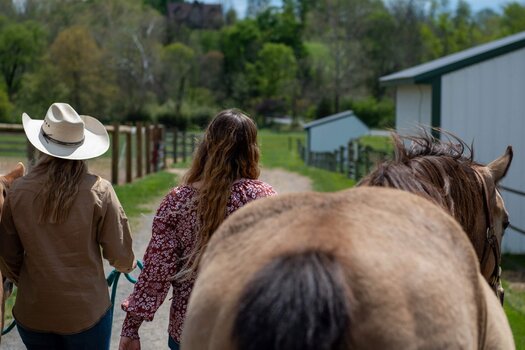
Whether you are navigating ADHD, autism, burnout, or the chronic exhaustion of masking, neurodiversity affirming therapy at Take Heart Counseling in Wernersville, PA begins with one core belief: you are not a problem to solve. You are a person whose brain processes differently.
We will address what is impairing your life. We will build capacity. We will create accountability. And we will do so without erasing who you are.
If you are looking for therapy that honors your intensity, your sensitivity, your depth, and your drive while also helping you build practical tools for everyday functioning, that is the work I do. You are not broken. You may be overwhelmed. You may be burned out. You may need support learning how to regulate and structure your world differently.
But you are not defective.
And you do not have to keep shrinking in order to belong.
If you are ready to explore neurodiversity affirming therapy, equine assisted psychotherapy, or support for ADHD, autism, burnout, or masking in Berks County, Pennsylvania, we are here to help.
At Take Heart Counseling, we’ve seen how meaningful progress can come from starting in calm, quiet spaces. For many families, this gentle approach helps children feel safer, more focused, and less overwhelmed. Wondering whether equine-assisted psychotherapy could support your child’s emotional growth? We’d be glad to talk through what might work best. Let’s find the right path together and start a conversation.